Originally published at: CN and UP reach settlement on Norfolk Southern merger - FreightWaves
■■■■■■■■ National will support the UP-NS merger in exchange for improved access to markets in the U.S. Midwest and Mexico.
A letter to my Chicago West Suburbs Sister:
Dear Sister,
You and Bill sold that house on Royal Porthcawl on the Tamarack 13th Tee at the right time. Those red-wing blackbird calls are about to be buried in railroad horns.
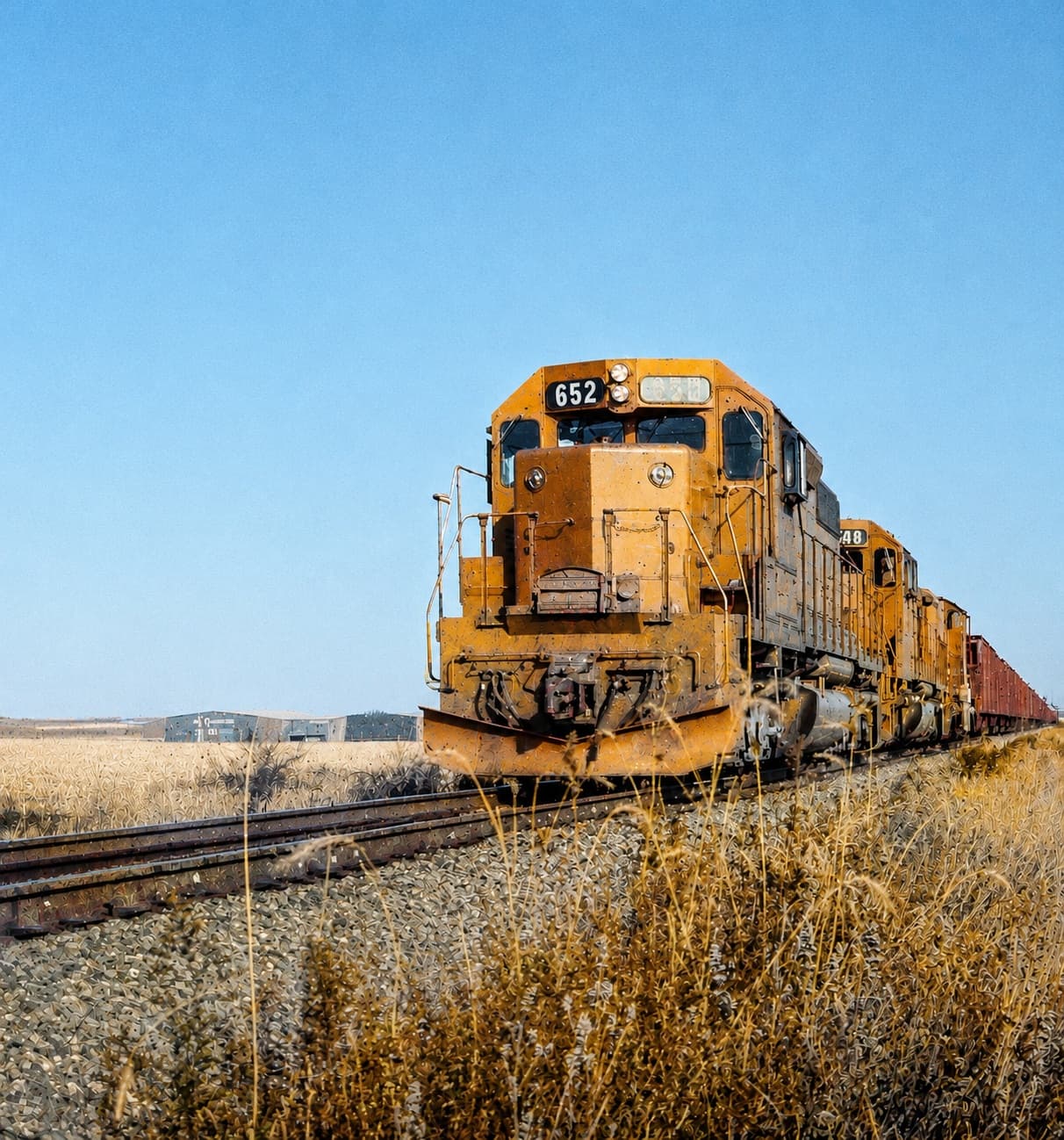
Remember the old EJ&E tracks that ran through all those cornfields west of Naperville and Plainfield? When I was taking train pictures there in November 1974 with my Kodak Instamatic, there wasn’t much around except farms. One of those photos has become unexpectedly historic. Fifty years later, the little belt railroad I photographed may become one of the most strategically important freight corridors in North America.
Union Pacific is trying to merge with Norfolk Southern. As part of that effort, it has reached an agreement with ■■■■■■■■ National that would give UP access to the old EJ&E—the “J.” CN bought it years ago because it offered a fast way around hopelessly congested Chicago. Now UP wants to use that same route to move transcontinental freight directly to the East Coast.
Railroad people have always known the J was a jewel. I remember arguing long before CN bought it that it was one of the most valuable railroad assets on the national map. Most folks saw only a quiet railroad crossing their subdivision. Railroaders saw a bypass around the biggest freight bottleneck in North America.
That difference in perspective fascinates me. Homeowners understandably see more trains, more horns, and longer waits at crossings. Railroad planners see a way to shave a day or two off freight moving between California and New Jersey.
The merger debate itself has become much larger than whether two railroads should combine. It has forced people to ask bigger questions about trucking, highways, public investment, railroad competition, and why rail has steadily lost market share despite being remarkably efficient. My view has been that we shouldn’t evaluate this merger without first understanding how decades of transportation policy and freight distribution decisions created today’s marketplace.
Still, every time I look at that old 1974 photograph, I smile. I unknowingly captured the EJ&E before Naperville exploded westward, before golf courses and subdivisions surrounded it, and before anyone imagined it might become a continental freight artery. Back then, there were only cornfields, blue sky, and an EJ&E SD28-2 rolling through the prairie.
Sometimes an old snapshot turns into a history lesson.
Love,
Your Brother